Journal
Insuring a yacht in the UAE: what owners should know
By the JJ Marine team ·
Insuring a yacht in the UAE means balancing legal compliance with meaningful protection for your boat, guests and liabilities. At a minimum you will need third-party liability cover for UAE waters, but most owners choose broader hull, machinery and personal accident protection, tailored to where and how they cruise. The right policy depends on your yacht, usage pattern and risk appetite.
What are the legal yacht insurance requirements in the UAE?
In the UAE, marinas and authorities typically require proof of insurance before they issue or renew a berth or navigation permit. The minimum is usually third-party liability cover, set at a limit defined by the marina or regulator rather than by federal law.
For a Dubai Marina berth, you will normally be asked to show a valid insurance certificate that names the yacht, its value and the liability limit. Without this, your yacht may not be accepted into the marina or may be denied renewal, which can affect your ability to use or move the boat legally.
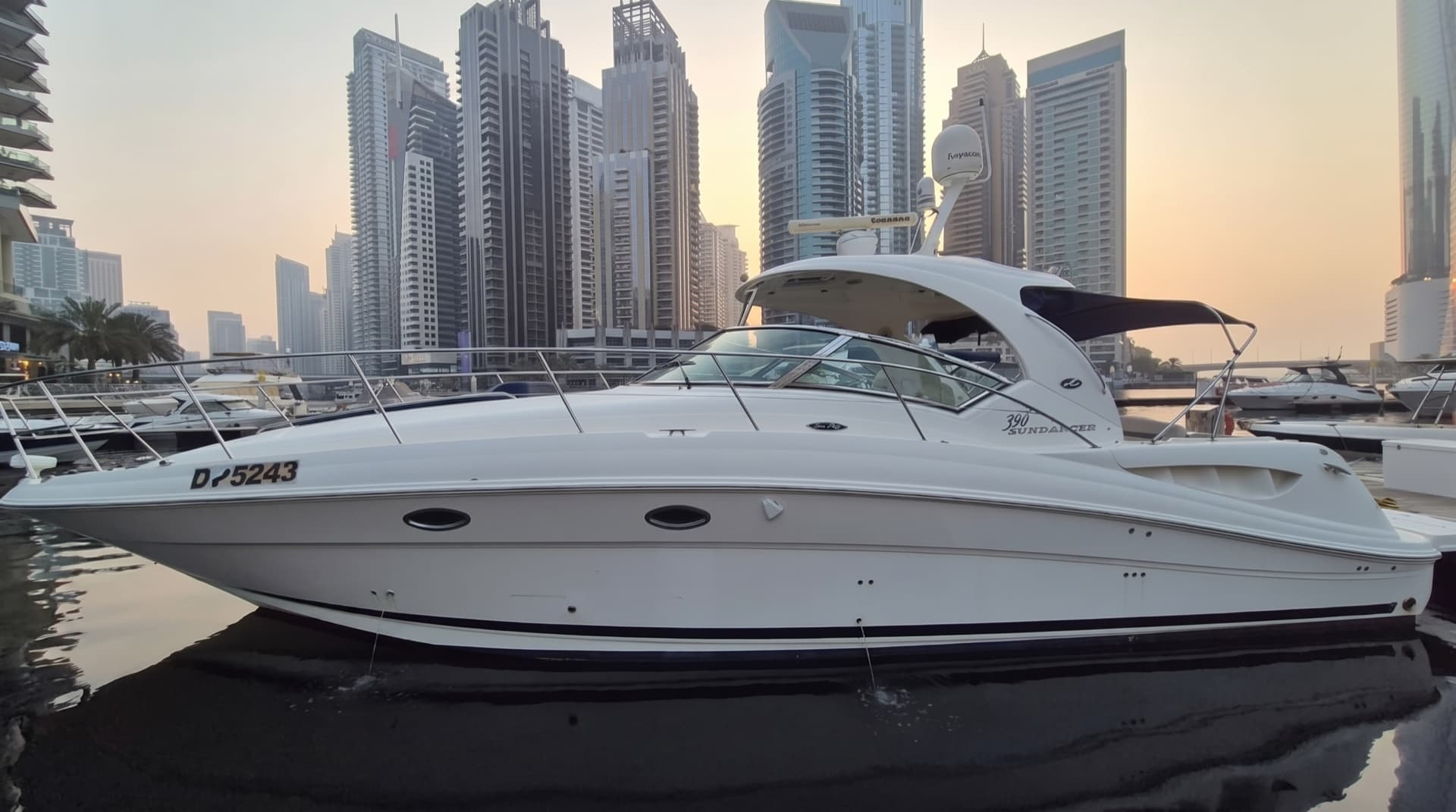
Although basic liability satisfies marina requirements, it does not protect the value of the yacht itself. Owners of pre-owned boats such as a Sea Ray 390 Sundancer at Dubai Marina usually opt for broader cover that reflects replacement and repair costs as well as their mooring location.
What types of yacht insurance cover are available in the UAE?
Yacht policies in the UAE broadly follow international norms. The main distinction is between third-party liability only, and comprehensive cover that includes hull and machinery.
Common elements include:
- Third-party liability - Covers damage or injury you cause to other boats, infrastructure or people. A basic requirement for most marinas and yacht clubs.
- Hull and machinery - Covers physical damage to your yacht from collisions, grounding, fire, theft and named perils. This is usually based on an agreed value or market value of the yacht.
- Personal accident and medical - Provides compensation for you and your guests in case of injury on board or while embarking and disembarking.
- Crew liability and work-related cover - Relevant if you employ professional crew, particularly on larger yachts and charter vessels.
- Tenders and toys - Often an add-on for jet skis, tenders and water toys that are associated with the yacht but may have their own risks.
Some UAE policies also include limited cover for personal effects and high-value items on board. These can be subject to lower limits, so owners of well-specified yachts or charter boats should review this carefully.
How do insurers value a yacht in the UAE?
Insurers usually work with two main valuation methods: agreed value and market value. The choice can significantly affect premiums and claims outcomes.
| Valuation type | How it works | Typical impact on owners | |----------------|-------------|---------------------------| | Agreed value | You and the insurer agree a fixed sum insured at the start of the policy. | More predictable payouts on a total loss, often higher premium. | | Market value | Payout is based on the yacht's value at the time of loss. | Lower premiums, but payouts reflect depreciation and market conditions. |
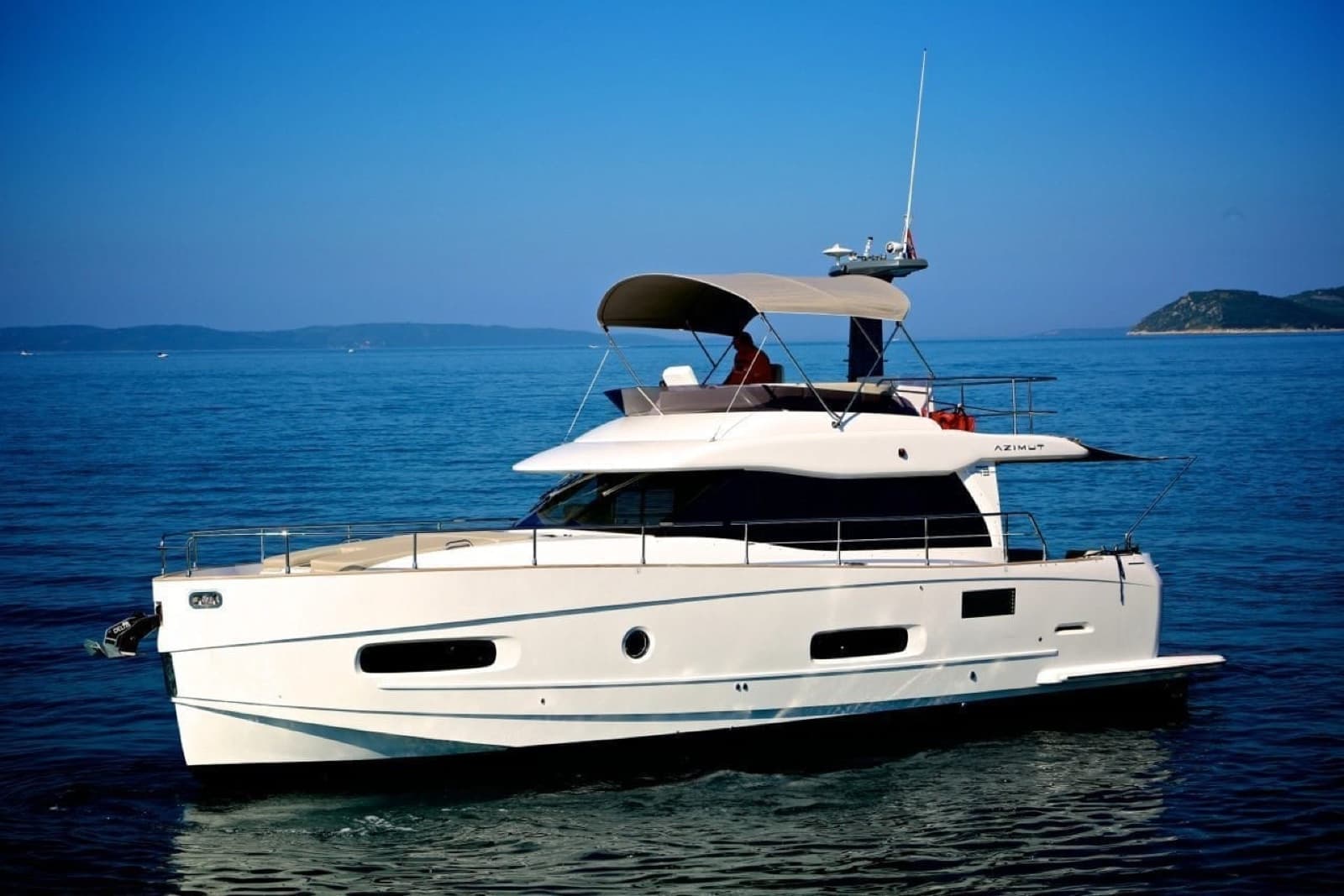
For a current production charter yacht such as an Azimut Magellano 43 based in Dubai, insurers may be comfortable with an agreed value backed by recent invoices and specifications. Older pre-owned yachts are more often placed on a market value basis, which reflects age, equipment and condition.
In all cases, you will be expected to declare a realistic sum insured. Overstating the value does not usually benefit you, while understating it can result in underinsurance and proportionally reduced claims.
Which factors affect yacht insurance premiums in the UAE?
Premiums in the UAE typically reflect the same risk drivers as other mature boating markets, along with some regional specifics. Insurers look at the boat, the owner and how and where it is used.
Common factors include:
- Type, size and age of the yacht - Larger, faster and higher-value yachts cost more to insure. Older boats may attract higher rates or additional survey requirements.
- Construction and equipment - GRP, aluminium and steel hulls are treated differently. Features like bow thrusters, radar and modern navigation electronics can sometimes be seen as risk-reducing.
- Home port and cruising area - A yacht kept at Dubai Marina with limited local cruising may be rated differently from one regularly crossing to Oman or further afield.
- Owner experience and claims history - Documented time on the water and a clean claims record generally work in your favour.
- Usage - Private use, corporate entertaining, or commercial charter all carry distinct risk profiles. Charter use nearly always requires specific cover.
For many UAE-based owners, the premium is a modest percentage of the yacht's annual running costs. Placing that in context alongside berthing, crew and maintenance can be helpful
- see our guide to the cost of owning a yacht in Dubai.
What coverage details do UAE yacht owners often overlook?
Several details tend to be missed when owners compare policies. These can materially affect how useful the insurance is when something happens.
Areas to examine closely include:
- Navigation limits - The waters and region where your cover applies. Check whether coastal cruising, international voyages or Gulf crossings are included.
- Named operators and minimum qualifications - Some policies require the skipper to hold specific licences or set a minimum experience level.
- Lay-up and usage clauses - How the policy treats periods where the yacht is out of the water or not used, and whether there are restrictions on night passages or single-handed operation.
- Storm and mooring conditions - Requirements to move or secure the yacht in adverse weather, which can be relevant to exposed berths.
- Excesses and deductibles - The amount you pay on each claim, which can differ between hull damage, theft, and liability.
Owners moving from rental to ownership, or upgrading from a smaller boat, often underestimate these nuances. If you are comparing policies while exploring options such as buying your first yacht in Dubai or weighing new vs pre-owned yachts
- see our guides at buying your first yacht in Dubai and new vs pre-owned yachts in Dubai for broader ownership context.
How does charter and private use affect insurance in the UAE?
Using your yacht for commercial charter, or placing it into a managed charter programme, changes the risk profile substantially. Insurers generally require a specific charter endorsement or a separate commercial policy.
Key differences from private use policies can include:
- Higher liability limits, given the presence of paying guests.
- Stricter crewing, safety and maintenance requirements.
- Specific rules around alcohol, water toys and night-time operation.
If you are exploring yacht charter in Dubai as a step before ownership, or considering charter income from your own yacht, it is worth understanding how cover differs. Our guide to yacht charter in Dubai and the overview at yacht rental in Dubai will help frame the operational side.
How should a UAE owner approach choosing and managing yacht insurance?
A structured approach makes it easier to compare policies on more than price alone. Start with a clear picture of your yacht, how you plan to use it, and where you intend to keep it.
A sensible sequence is:
- Define your usage - Private, family, corporate entertaining, or charter. Include likely annual hours and cruising grounds.
- Obtain a recent survey if needed - Particularly for older or imported yachts, as some insurers will require this.
- Secure multiple quotes from marine-focused insurers or brokers - Ensure each quote is on a comparable basis for sum insured, excess and navigation limits.
- Review exclusions and conditions, not only limits - Pay attention to mooring requirements, crew rules and lay-up terms.
- Reassess annually - Changes in value, upgrades, or extended cruising plans should trigger a review.
Owners who are still at the research stage
- thinking about what size yacht they need, where to berth, and whether to buy new or pre-owned
- can build insurance into their overall planning. Our guides to what size yacht you need and the Dubai Marina berthing guide are a useful starting point.
JJ Marine is the official Jeanneau dealer in Dubai, based at Vida Dubai Marina & Yacht Club, with four decades on the water helping owners choose, manage and enjoy their yachts. We can talk you through insurance considerations alongside selection, whether you are looking at pre-owned options such as a Sea Ray 390 Sundancer, new Jeanneau models, or placing a yacht into charter. To discuss your plans, you can call or WhatsApp us on +971 50 454 8415, email jaamaa@jjmarine.ae, or reach us via /pre-owned, /charter or /contact-us on our website.