Journal
Registering a boat in Dubai: how it works
By the JJ Marine team ·
Registering a boat in Dubai is a structured process handled mainly by Dubai’s Roads and Transport Authority (RTA) and the coastguard. You will need proof of ownership, a TRA number, compliant safety equipment, insurance and a successful technical inspection before you receive your registration card and number plates. Preparation is everything, particularly for first-time owners.
What does “registering a boat in Dubai” actually involve?
In Dubai, every powered boat and yacht must be registered with the relevant maritime authority before it goes on the water. Registration links the vessel to an owner, confirms compliance with technical and safety standards and assigns an official registration number.
For most private leisure boats used within Dubai waters, the process typically runs through the RTA Marine Agency and the local coastguard. If you plan to charter the boat commercially, there are additional permits and survey requirements that sit on top of the basic registration.
Who can register a boat in Dubai?
As a rule, a boat can be registered by a UAE national or by an entity that meets local ownership and licensing requirements. Expatriates often register through a locally licensed company or under structures advised by their legal or corporate services provider.
The key point is that the “registered owner” on the certificate must match the entity that appears on the bill of sale or builder’s certificate. If you are buying pre-owned, it is important that the seller’s ownership is properly recorded and that there are no outstanding finance or liens on the vessel.
What documents do you need to register a boat in Dubai?
The exact list can vary slightly by authority and boat type, but you should expect to prepare:
- Passport and Emirates ID copy (for individuals)
- Trade licence and company documents (for corporate owners)
- Proof of ownership (builder’s certificate, original invoice, or notarised bill of sale)
- Previous registration certificate, if the boat is already registered elsewhere
- Hull Identification Number (HIN) / serial number and engine numbers
- Insurance policy covering the boat for at least third-party liability
- Recent photographs of the boat (showing hull, name, and HIN plate where applicable)
- Customs clearance documents for imported boats
For new buyers, working through a structured purchase checklist can avoid last-minute issues. Guides such as /guides/buying-your-first-yacht-in-dubai and /guides/new-vs-pre-owned-yachts-dubai are useful context before you commit to a specific vessel.
How does the registration process work step by step?
Every case has nuances, but a typical private leisure registration in Dubai follows this sequence.
1. Confirm eligibility and clear title
Before you apply, confirm that:
- The boat is suitable for registration in Dubai waters (size, type and condition)
- The seller has clear title with no outstanding marine mortgage or dispute
- The HIN and engine numbers match the documents
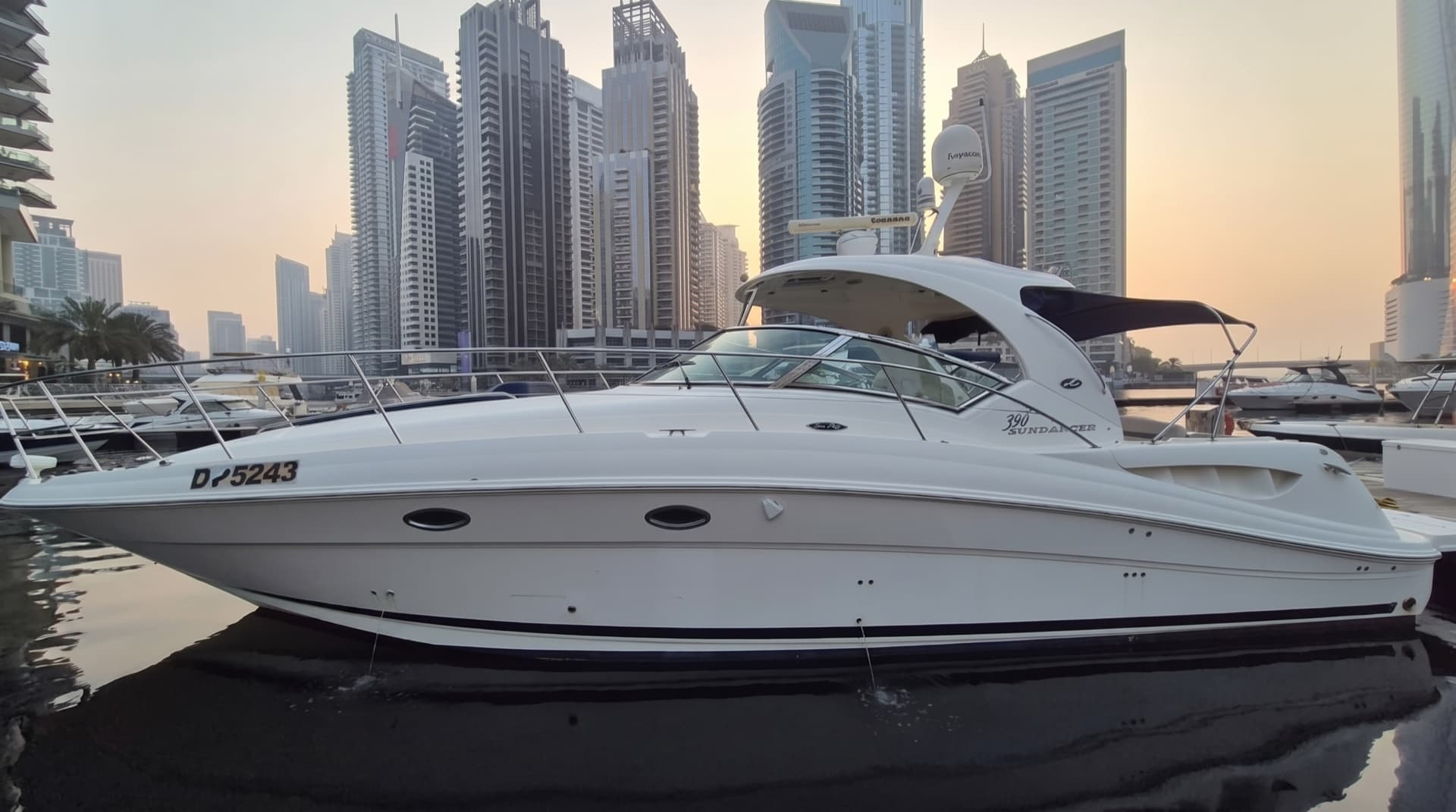
For a pre-owned cruiser such as a Sea Ray 390 Sundancer in Dubai Marina, this is usually handled at survey and due diligence stage. Any discrepancy between the plate and the paperwork will delay registration.
2. Apply for a TRA number
The TRA number is the basic reference used when registering a vessel. It is applied for through the relevant authority portal and ties together your identity, the boat’s particulars and its intended use.
You will typically enter the hull dimensions, engine power, build material and construction year. This is also the stage where you indicate whether you intend to use the boat privately or commercially.
3. Arrange compulsory insurance
You will need at least third-party liability insurance in place before the boat is finally registered. Most owners choose wider cover that includes hull damage, theft and salvage, especially for higher-value yachts.
Insurers will usually ask for the same core data as the registration authority: length, engines, value and usage pattern. If you are unsure what level of cover is proportionate for your budget, the numbers in /guides/cost-of-owning-a-yacht-in-dubai can provide a helpful baseline.
4. Prepare safety equipment to Dubai standards
Dubai applies minimum equipment standards that typically include:
- Approved lifejackets for all persons on board
- Fire extinguishers and, for larger boats, fixed fire systems
- Navigation lights and sound signalling devices
- Flares and other distress equipment, depending on area of operation
- VHF radio and basic navigation electronics for coastal use
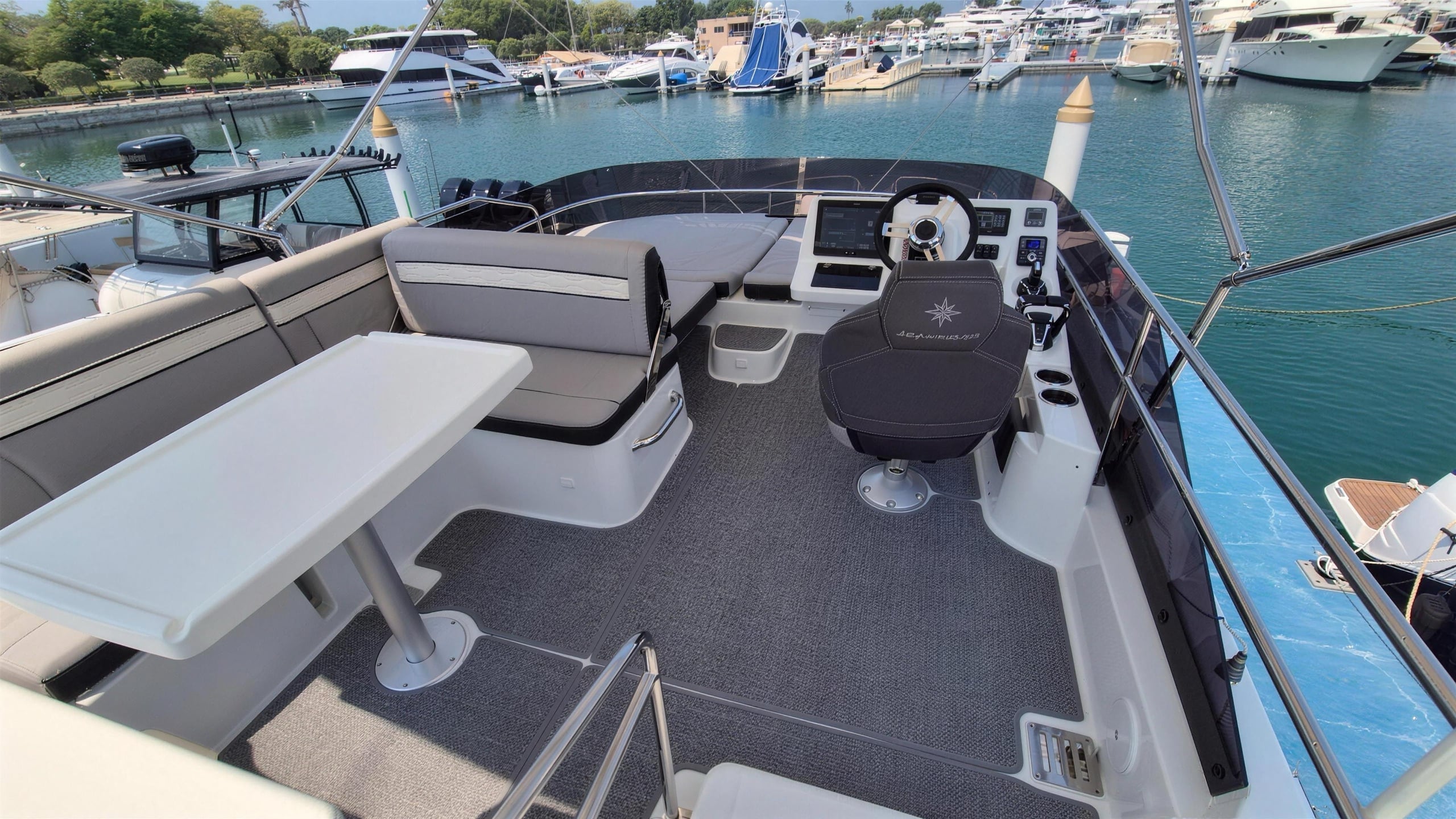
For a compact coastal cruiser or a flybridge yacht used from Dubai Marina, an inspection will look for practical accessibility and proper installation, not just presence. Buying a new Jeanneau through an official dealer in Dubai is one way to ensure the specification is aligned from day one.
5. Book and complete the technical inspection
Once your documents and safety kit are in order, you book a technical inspection. This can take place at designated marinas or service yards and is performed by certified inspectors.
They will check the hull, machinery, electrical systems, steering, fuel system, bilge pumps and safety equipment. Any issues are listed as rectifications, which you must complete before a final approval is issued.
What fees and ongoing costs apply to Dubai boat registration?
Registration involves initial application fees and then periodic renewal fees. The exact tariff depends on length, type, engine power and whether the boat is used privately or commercially.
You should also budget for:
- Annual renewal of the registration certificate
- Annual insurance renewal
- Any required periodic surveys, particularly for charter vessels
These costs sit alongside berthing, maintenance and crew, which are outlined in /guides/how-much-does-a-yacht-cost-in-dubai and /guides/cost-of-owning-a-yacht-in-dubai. Considering registration and compliance early in your budgeting avoids surprises once your boat arrives.
Typical information you provide at registration
| Item | Example entry for a Dubai cruiser | |------------------------------|---------------------------------------------------------------------| | Boat type | GRP motor cruiser, private leisure use | | Length overall (LOA) | 12.5 m | | Beam | 4.0 m | | Engines | 2 x inboard petrol, 370 hp each | | Hull ID and engine numbers | As on plates and manufacturer documents | | Berthing location | Dubai Marina | | Maximum persons on board | As per builder’s plate and stability calculations | | Intended operating area | Coastal UAE waters |
How is commercial registration different in Dubai?
If you plan to run the boat as a charter yacht or sightseeing vessel, you will face more rigorous standards. These usually involve more frequent surveys, enhanced safety equipment, stability documentation and crew licensing.
Permits must match the actual operation. For example, a yacht used occasionally for private family cruising and a yacht marketed for regular charter on the Palm or along the Dubai coastline are treated very differently in regulatory terms, even if they are similar sizes.
For owners who wish to enjoy the charter income without managing the compliance themselves, professional yacht management and charter services such as /charter can be an efficient route.
How long does Dubai boat registration take and how can you simplify it?
Timelines vary with boat condition, completeness of documents and inspection slots. A well-prepared file for a standard private boat can move relatively quickly. Complex cases with missing documents, imported boats without full clearance or significant technical defects can take far longer.
You can simplify the process by:
- Choosing a boat already in Dubai with a clear local history, such as a well-kept pre-owned cruiser in Dubai Marina
- Using recognised brokers or dealers who handle paperwork routinely
- Ensuring customs and VAT matters are settled before initiating registration
- Planning any refit or upgrade after the initial inspection, not before the papers are in order
Guides such as /guides/dubai-marina-berthing-guide and /guides/what-size-yacht-do-you-need help you align registration, berthing and usage plans from the outset.
JJ Marine is based at Vida Dubai Marina & Yacht Club and has four decades on the water supporting owners in the UAE. Whether you are selecting a new Jeanneau, assessing a pre-owned yacht or preparing a boat for charter, the team can help you navigate registration, surveys and berthing in a straightforward way. You can reach JJ Marine on WhatsApp or phone at +971 50 454 8415, by email at jaamaa@jjmarine.ae, or via the form on /contact-us.