Journal
How do you keep a boat healthy through a Dubai summer?
By the JJ Marine team ·
Keeping a boat healthy through a Dubai summer comes down to three things: shielding it from heat and UV, managing moisture, and staying ahead of maintenance. With the right shade, gelcoat care, air conditioning routines and regular system checks, your yacht can sit comfortably through August - and still feel fresh for your first cool-season cruise.
Why is Dubai summer so hard on boats?
Dubai’s summer combines extreme UV, high air temperatures, hot seawater and heavy humidity. All four attack a yacht at the same time.
Gelcoat chalks and fades, fabrics and clears go brittle, seals dry out, and metalwork corrodes faster. Inside, closed boats trap heat and moisture, which is hard on air conditioning, electronics and soft furnishings.
Recognising this is the first step. A boat that is fine in a mild climate usually needs a different routine to stay healthy in a UAE summer.
How do you protect gelcoat and paint from heat and UV?
Gelcoat and paint are your first line of defence. They need both physical shade and chemical protection.
Use shade where possible
- Canopy or full cover: A well-fitted cover or sun awning over the cockpit and foredeck dramatically reduces UV exposure. It also lowers deck temperature, which helps the interior.
- Marina orientation: If you can, berth so the harsh afternoon sun is not hitting the same side all day. Even a small change in angle can reduce hotspots.
Keep a regular polishing routine
- Wash often: Dust, salt and pollution bake into hot gelcoat. A gentle rinse and shampoo at least weekly in peak summer helps preserve the surface.
- Protective wax or sealant: A quality marine wax or polymer sealant adds a sacrificial layer against UV and grime. In this climate, most owners reapply every few months rather than once a season.
- Spot attention to high-wear areas: Swim platforms, steps and the bow sunpad area often show chalking first. Deal with these early before they dull permanently.
Watch for early warning signs
- Chalky residue on your cloth when you wipe.
- Noticeable fade where fenders hang or covers do not reach.
- Hairline cracks around fittings that expand in the heat.
Deal with these during the summer, not after it. A light cut and polish is far easier than a refinishing job.
How should you manage air conditioning and interior health?
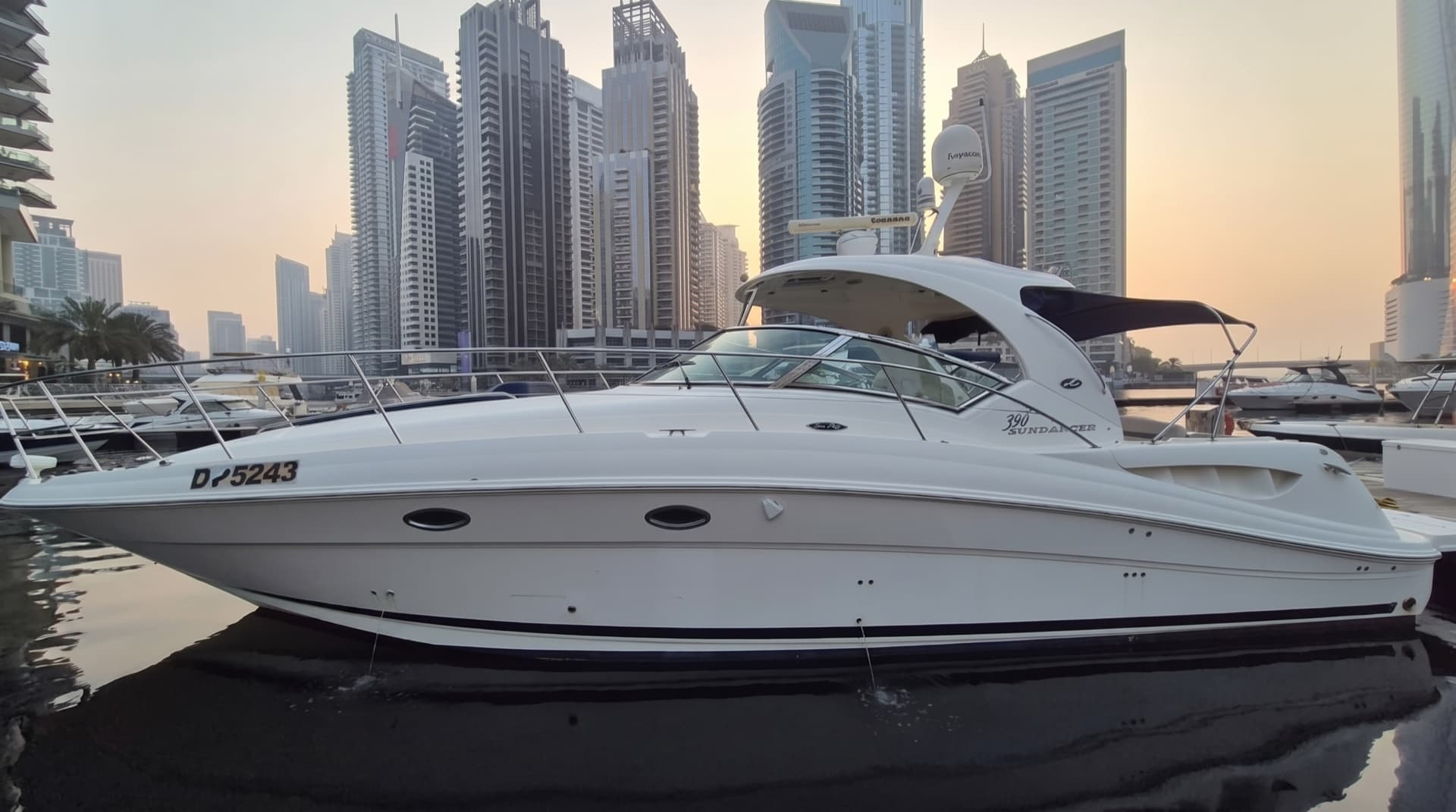
In Dubai, a boat’s air conditioning is not a luxury, it is a key protection system for the interior. Units such as the three-zone air conditioning on a Sea Ray 390 Sundancer at Dubai Marina are valuable, but they need careful operation.
Run a sensible cooling strategy
- Avoid extreme set points: Setting the AC to very low temperatures forces it to run constantly in 40°C heat. A higher, stable setting usually protects furnishings and systems without overloading the equipment.
- Use dehumidify modes if available: Some systems can hold a slightly higher temperature while still pulling moisture out of the air, which helps prevent mould.
- Consider timers: Where practical, cycling AC use through the hottest part of the day can balance comfort, system wear and shore power costs.
Protect the interior from moisture
- Ventilation when safe: When temperatures allow, short periods of natural ventilation help dry the interior. Use insect screens and be cautious during sandstorms.
- Moisture absorbers: Dehumidifier tubs or small electric units in closed cabins and lockers reduce the risk of mould on linings and mattresses.
- Soft furnishing care: Lift cushions slightly off solid bases so air can circulate. Rotate and air mattresses whenever you visit the boat.
Look after the AC system itself
- Clean or replace filters regularly.
- Inspect condensate drains for blockages so pans do not overflow into bilges.
- Check seawater strainers and pumps - hot seawater can shorten pump life if they are working constantly.
What maintenance routines help a yacht survive the heat?
A Dubai summer rewards owners who shift from “big annual service” thinking to “little and often”. Short, regular visits or a professional management plan are usually more effective.
Focus on the items most stressed by heat
- Batteries: High temperatures accelerate battery ageing. Check electrolyte levels where applicable, look for swelling, and confirm charging voltages are correct.
- Electronics: Multifunction displays and radar units dislike being baked behind glass. Use instrument covers and avoid leaving systems on unnecessarily.
- Rubber and plastics: Hoses, bellows, wiper blades and window seals harden faster in the sun. A visual check and gentle pressure test can catch issues early.
Keep a simple monthly checklist
- Shore power connections secure and cool to the touch.
- Bilge pumps tested and float switches free of debris.
- Fire extinguishers and gas systems inspected.
- Lines and fenders checked for chafe and UV damage.
Owners who prefer a managed approach often build these tasks into a yacht management programme, with photo and video reports, so they can see their boat’s condition even when travelling.
How do heat and humidity affect gelcoat, teak and canvas?
Different exterior materials age in different ways through a Dubai summer. Knowing what to expect helps you choose the right protection.
Gelcoat and GRP
- Regular washing and waxing are the core defences.
- Avoid harsh cleaners that strip protective layers.
- Where gelcoat is already thinning, consider professional advice before attempting aggressive polishing.
Teak decks and exterior wood
- In this climate, many owners accept a silvered look and focus on gentle cleaning rather than constant sanding.
- Avoid two extremes: baking-dry teak with no care, or over-scrubbing that removes soft grain.
- If you prefer a “new” teak look, use products designed for high UV regions and follow the application schedule carefully.
Canvas, clears and upholstery
- Use covers; they cost less than constant replacement.
- Rinse salt from clears and canvas. Salt crystals and heat are a destructive combination.
- Avoid folding clears sharply in the heat, as soft plastic becomes more prone to crease damage.
Should you use your boat in summer or leave it tied up?
Many Dubai owners reduce their usage in peak months, but light, regular use is usually healthier for the boat than total hibernation.
Advantages of occasional summer outings
- Engines and generators reach operating temperature, circulating oil and preventing internal corrosion.
- Fuel is agitated, which can discourage water layering in tanks.
- You and your crew stay familiar with the boat’s systems and quirks.
If you prefer to keep the boat static
- Arrange for a short monthly outing by a trusted skipper or management company.
- At minimum, run engines, generator and key systems on the berth according to manufacturer recommendations.
- Keep a log of all summer checks and starts; it is reassuring and useful when planning future maintenance.
If you are considering whether a different style or size of yacht might cope better with your usage pattern, it can help to compare options using guides such as /guides/what-size-yacht-do-you-need and /guides/new-vs-pre-owned-yachts-dubai.
How can marina habits keep your boat healthier?
Your behaviour on the berth has a direct effect on summer longevity.
Smart mooring and fendering
- Use adequate fenders and lines that account for summer swells and wake in Dubai Marina and nearby waters.
- Check for chafe where lines cross hot, rough surfaces; leathering or hose sleeves can help.
- Ensure fender socks are clean so they do not act like sandpaper on gelcoat.
Shore power and water discipline
- Use correctly rated, good-quality shore power cables.
- Coil hoses out of direct sun where possible; heated water inside a hose can be surprisingly aggressive to fittings.
- Close seacocks that do not need to remain open and label them clearly.
Plan around your lifestyle
If you mostly use the boat in the cooler season, summer is the right time to plan any upgrades or changes. Owners thinking about moving from charter usage to ownership, or stepping up to a larger yacht, often start their research with /guides/yacht-charter-dubai-guide, /guides/buying-your-first-yacht-in-dubai and /guides/cost-of-owning-a-yacht-in-dubai.
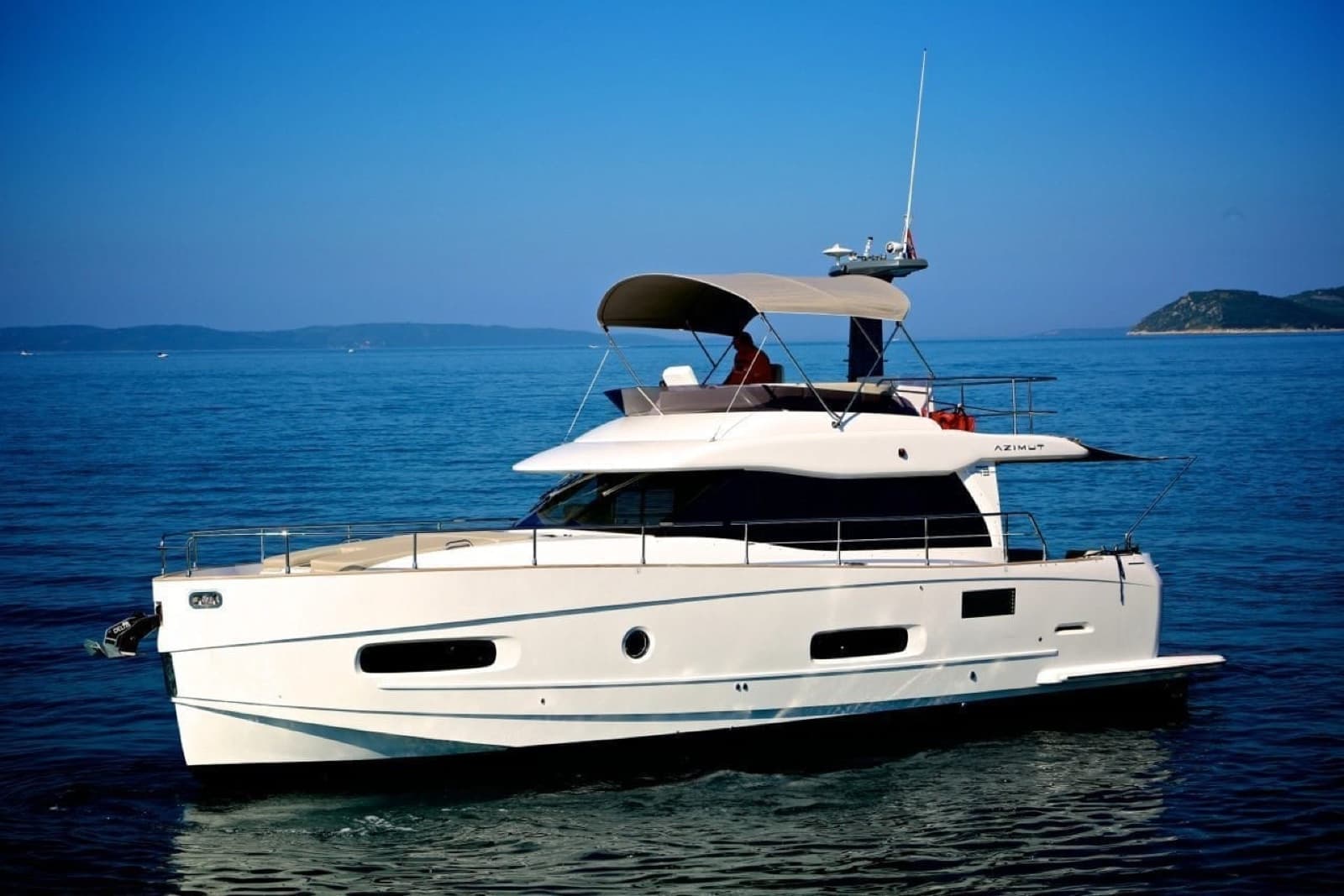
For hands-on experience of what feels comfortable through the hotter months, a climate-conscious charter on a well-specified boat such as an Azimut Magellano 43 can be a useful test before you commit.
JJ Marine is based at Vida Dubai Marina & Yacht Club and has four decades on the water in the region. Whether you need help planning summer maintenance, are considering moving into pre-owned ownership, or want short, well-managed access to the water via /charter, the team is available on WhatsApp or phone at +971 50 454 8415, or by email at jaamaa@jjmarine.ae. You can also reach out via the contact page to discuss a tailored care plan for your yacht.