Journal
Living aboard a yacht in Dubai: what it really takes
By the JJ Marine team ·
Living aboard a yacht in Dubai can be deeply rewarding, but it is not a shortcut to a cheaper, easier life. It suits people who value water, privacy and flexibility over floor space and routine. You will need the right yacht, a realistic budget, solid paperwork and a mindset that treats the boat as a home you actively manage, not a flat that looks after itself.
Is living on a yacht in Dubai actually allowed?
Dubai does not forbid living aboard, but it is regulated by where you berth rather than by a single citywide rule. The marina’s contract, safety rules and ID requirements dictate what is possible.
Most major marinas permit long-stay or residential-style berthing on private yachts that meet their standards. That usually means valid registration, insurance, compliant electrical systems and acceptable onboard waste arrangements. You will sign a berthing agreement that sets out what you may and may not do on board.
If you plan to live aboard while working in Dubai, your visa status must be anchored by your employer, free zone company or other sponsor. The yacht is not a substitute for immigration status or an address on your Emirates ID. In practice, many liveaboards use a relative’s or company’s address for formal paperwork and treat the yacht as their primary home.
How comfortable is full-time life on a yacht in Dubai?
Comfort depends far more on design and systems than on length alone. In the UAE climate, reliable air conditioning, shade and ventilation are non-negotiable.
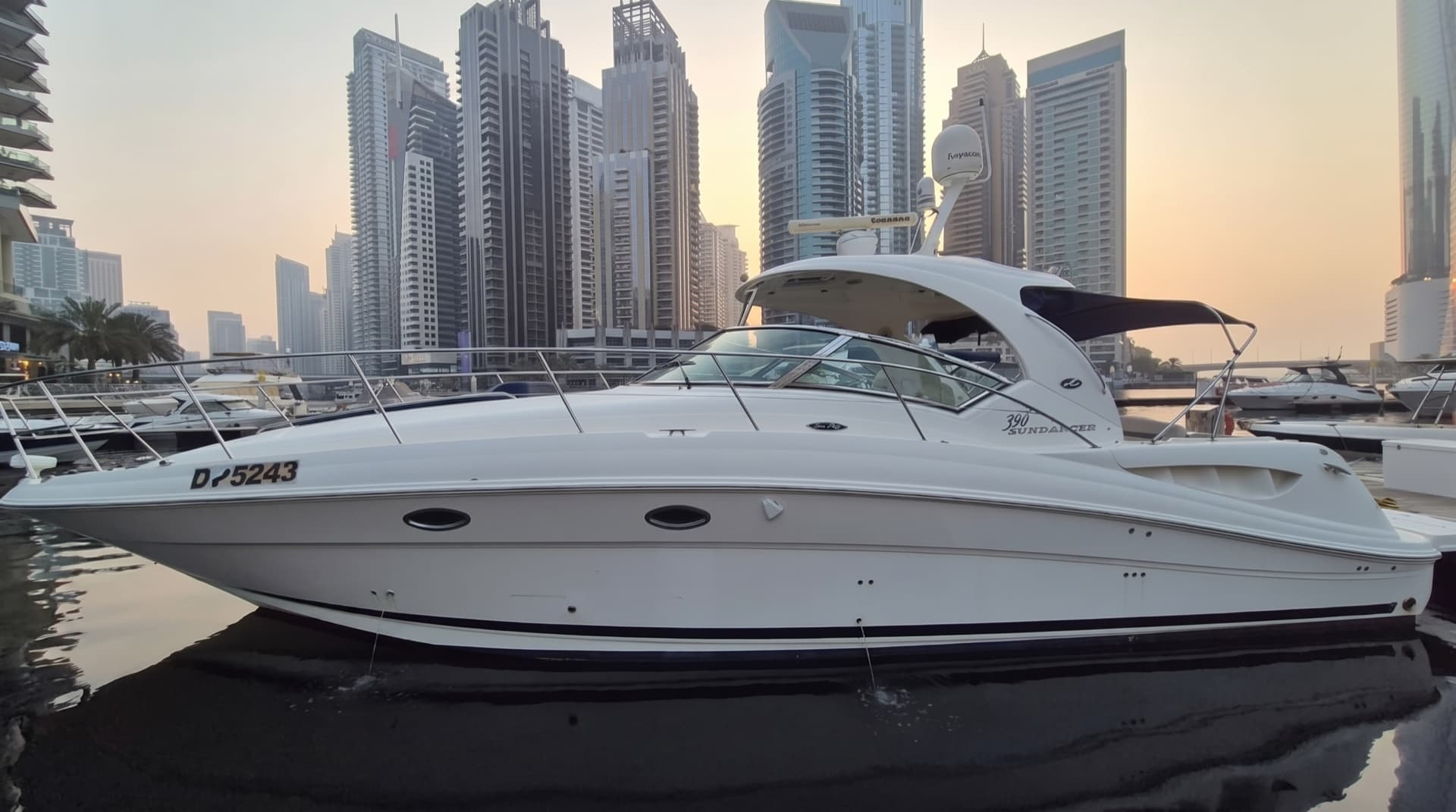
A mid‑size cruiser such as a Sea Ray 390 Sundancer can work well as a liveaboard for a single or a couple. It offers two cabins, a separate shower compartment and three‑zone air conditioning so you can cool the forward cabin, saloon and cockpit independently. That flexibility matters when you are trying to sleep comfortably in August without freezing the entire interior.
Layout is as important as specification. Separate cabins, a proper shower, a workable galley and enough storage for clothes and provisions all make day‑to‑day life feel less like camping and more like a compact apartment. Older boats can be very comfortable if the air conditioning, lighting and soft furnishings have been refreshed.
Noise is another factor. Marinas are quieter than many city streets, but you will hear dock carts, dockside conversations and engines. Good insulation, quality hatches and a respectful dock community all help. If you are sensitive to motion, choose a wider, heavier boat and a calm berth, preferably well inside the breakwater.
What does it really cost to live aboard in Dubai?
Living aboard can be more cost‑efficient than renting a prime Marina apartment, but only if you are honest about the full picture. Your main recurring costs are berthing, utilities, insurance, maintenance and any finance on the yacht itself.
Berth fees are usually tied to the boat’s length and the marina’s facilities. Premium marinas charge more, but often include better security, parking and shore power. Then you have fuel for occasional cruising, haul‑outs, antifouling, engine servicing and air‑conditioning maintenance, which is crucial in the Gulf.
If you still need to buy the boat, factor in the initial outlay. A pre‑owned cruiser such as the Sea Ray 390 Sundancer at Dubai Marina offers a realistic entry point to liveaboard life without the cost of a large new yacht. Our guide on the cost of owning a yacht in Dubai sets out the typical ownership costs in more detail.
A liveaboard budget also includes small but regular spends: laundry if you do not have a machine onboard, marina Wi‑Fi or 5G data, and cleaning materials. Many owners also set aside a contingency fund each year for unexpected repairs, as marine systems rarely fail on a fixed schedule.
Typical cost components at a glance
| Cost area | What it covers | How it behaves over time | |--------------------|--------------------------------------------------------|---------------------------------------------| | Berthing | Marina space, security, facilities | Fairly stable, usually annual or seasonal | | Utilities | Shore power, water, Wi‑Fi (if separate) | Tracks usage and summer AC demand | | Maintenance | Engines, generator, AC, hull care | Lumpy costs, more as the yacht ages | | Insurance | Hull and third‑party liability | Annual premium, depends on value and usage | | Fuel | Cruising, generator use when off‑grid | Optional, flexible based on your lifestyle | | Depreciation | The yacht’s changing resale value | Slower on well‑kept, sought‑after models |
Which yachts work best as Dubai liveaboards?
There is no single “right” size, but there are clear patterns. Around 38‑45 feet is a common sweet spot for singles or couples who want full facilities without an unmanageable boat.
A boat like the Sea Ray 390 Sundancer illustrates why: two cabins, six berths, a separate shower, generator, air conditioning and a sociable cockpit that doubles as an outdoor living room. At 12.50 metres with a generous beam, it feels notably larger than a simple length figure suggests. This scale is also easier to berth and maintain than a yacht in the 60‑foot range.
If you are unsure where to start, our guide on what size yacht you need can help frame your thinking around guests, budget and where you will use the boat. For more context on ownership paths, see new vs pre‑owned yachts in Dubai and buying your first yacht in Dubai.
Catamarans appeal to some liveaboards for their space and stability, but berths are less common and often more expensive. Motor yachts are still the most typical liveaboard choice in Dubai because they suit the short distances and marina‑centric lifestyle.
What is day‑to‑day life actually like?
Living aboard in Dubai suits people who enjoy routines built around the water. Your morning might include a swim before work, coffee in the cockpit and a short walk through the marina rather than a lift down from the 40th floor.
Storage is limited compared with a flat, so minimalism is not optional. Many liveaboards rotate clothes seasonally and keep bulky possessions in shore storage. Cooking is entirely feasible on a well‑equipped galley, but you will learn to be tidy and deliberate with provisioning.
The rewards are subtle but real: sunset views, a sense of separation between the city and your home, and a close community with neighbouring boats. The trade‑off is that you must stay ahead of small issues - a blocked bilge pump or a tired battery bank is not something you can ignore until the weekend.
What legal and practical points do you need to cover?
Before moving aboard, ensure the yacht’s registration and insurance reflect how you will use it. Tell your insurer that the boat is your primary residence and confirm any conditions on cruising area, minimum crew or storm procedures.
Speak directly with your chosen marina about long‑term stays. Some have quiet expectations around appearance, laundry on deck, use of BBQs and receiving deliveries. A clear conversation at the start prevents misunderstandings later.
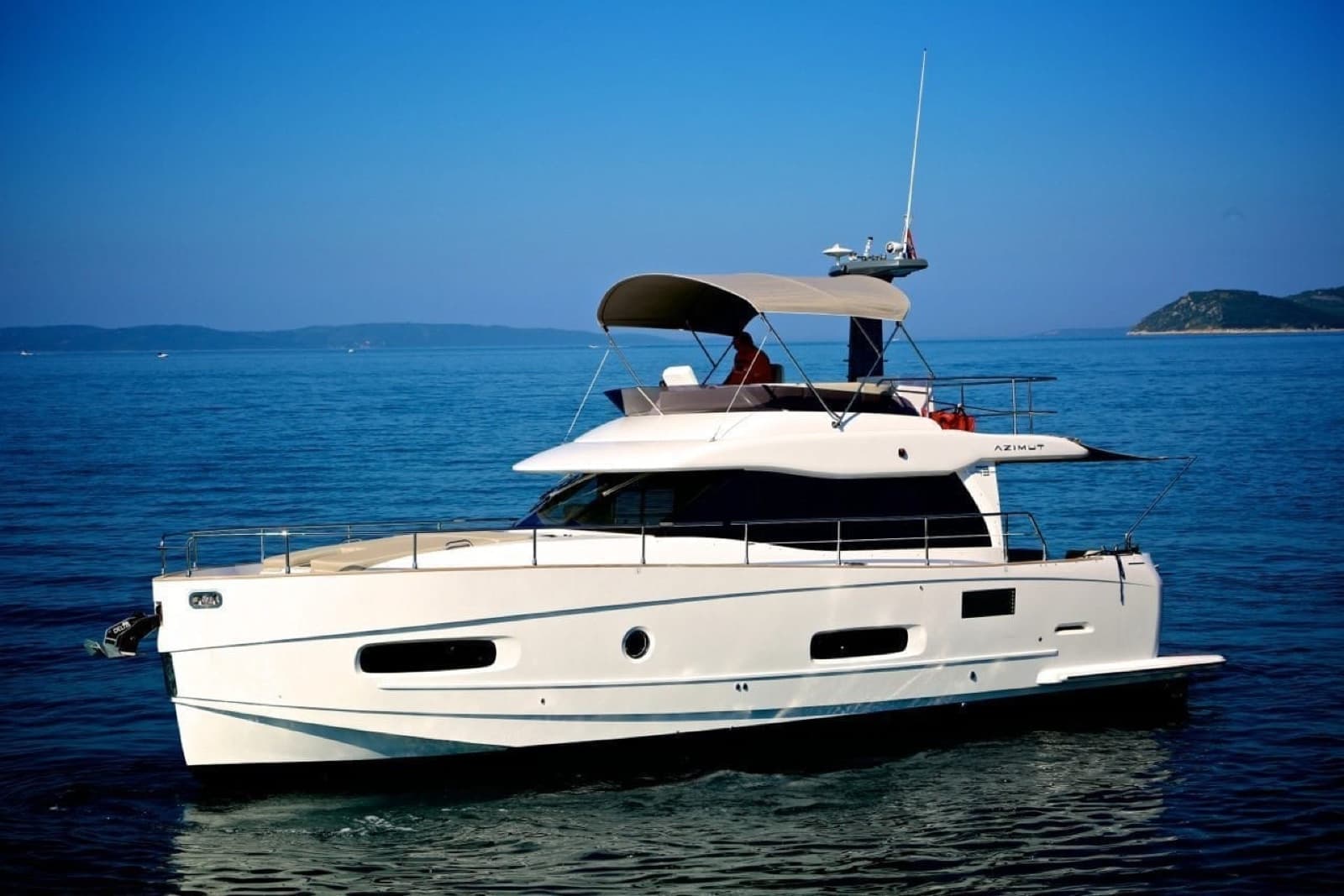
If you will be skippering yourself, you may need a recognised licence depending on the boat size and local requirements. Many owners start with skipper training on a charter boat first. Chartering a comfortable cruiser such as an Azimut Magellano 43 through our Dubai yacht charter service is a low‑risk way to test how you actually enjoy spending multiple days aboard.
How do you know if liveaboard life is right for you?
Think about your non‑negotiables. If you need absolute silence, large private workspaces or extensive wardrobes, a yacht will feel tight. If you value being on the water, do not mind maintenance and prefer experiences over square metres, you are closer to the right fit.
A practical approach is to work in stages. First, spend several nights in a row on a charter yacht. Then, if it still appeals, look at boats that are already berthed in locations you like and talk honestly with existing liveaboards.
Run your numbers carefully using realistic figures for berthing and maintenance. Our overview of how much a yacht costs in Dubai is a useful sense‑check before committing.
JJ Marine has spent four decades on the water in Dubai, helping clients decide whether a yacht should be a weekend escape or a full‑time home. If you would like to explore liveaboard‑friendly yachts, discuss berthing at Vida Dubai Marina & Yacht Club or simply sense‑check your plans, you can call or WhatsApp us on +971 50 454 8415 or email jaamaa@jjmarine.ae.