Journal
Flybridge or hardtop: which suits Gulf boating?
By the JJ Marine team ·
For Gulf boating, a flybridge suits owners who prioritise open-air views, extra social space and longer family trips. A hardtop suits those who value shade, higher speeds, simpler ownership and frequent day boating. In Dubai’s heat, the right choice comes down to how often you cruise, who you take aboard and how sensitive you are to wind, sun and running costs.
What is the real difference between a flybridge and a hardtop in Gulf waters?
Structurally, both flybridge and hardtop boats share the same hull concept. The difference is in how space above the main deck is used and protected.
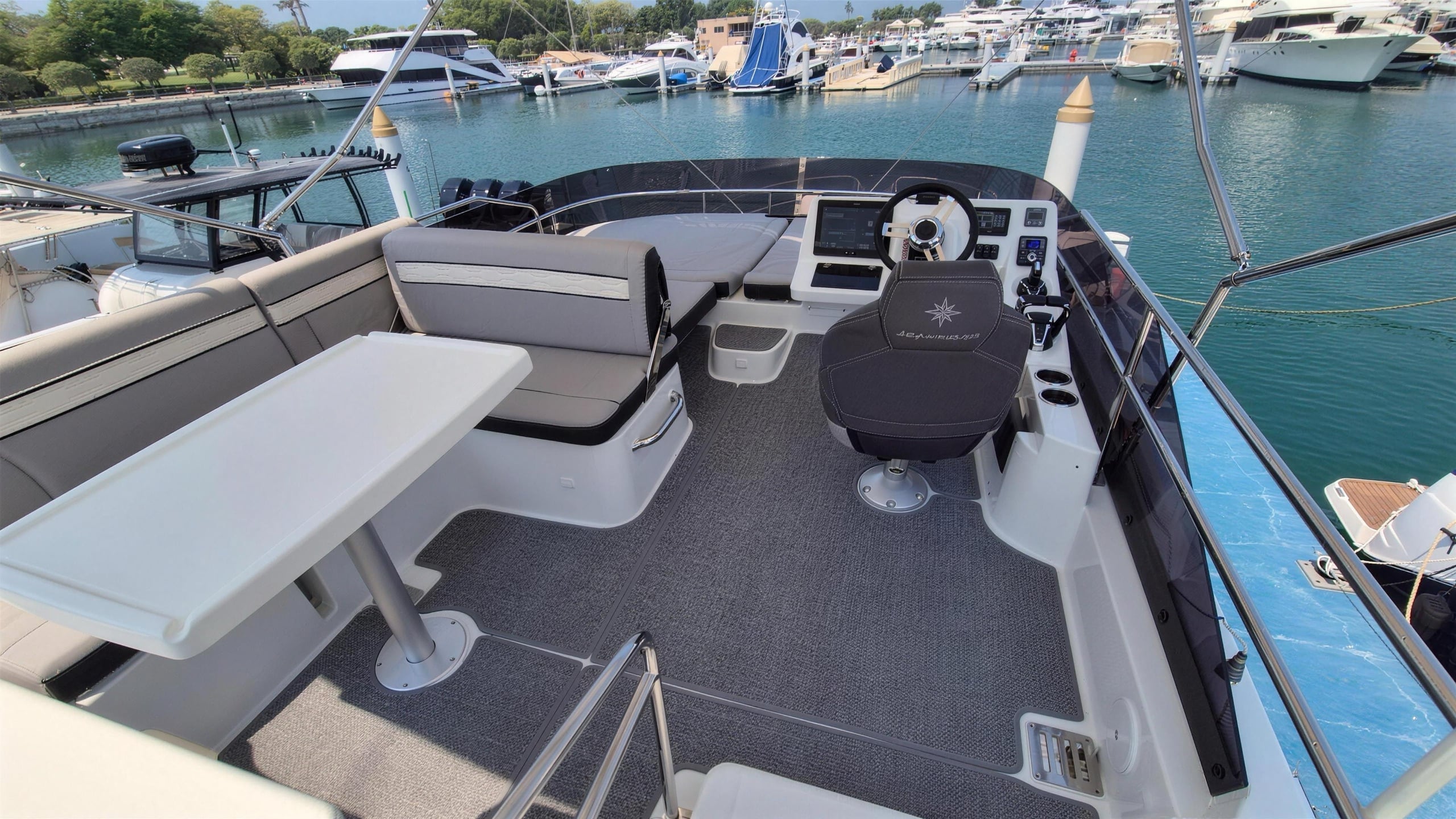
A flybridge adds an upper deck with secondary helm, seating and often a wetbar. A hardtop keeps all living space on one level, with a rigid roof over the cockpit and helm, plus either open sides or glass and air conditioning.
In the Gulf, this changes how you and your guests experience wind, heat and sea state. It also shapes how much time you will genuinely use each area once summer arrives.
How does Dubai’s climate affect flybridge vs hardtop use?
The Gulf climate is the main filter before style or brand. From late spring to early autumn, midday air temperatures and humidity make full sun exposure uncomfortable for long periods.
On a flybridge, you gain airflow and views, but you are more exposed to UV and reflected heat unless the upper deck is very well shaded. Many owners find they use the flybridge heavily in the cooler months and evenings, but retreat to the shaded main deck in peak summer.
A hardtop design, with a solid roof and often full glazing, focuses activity around a protected, air-conditioned saloon and cockpit. For frequent year-round use, especially during the hottest months, this controlled environment typically encourages longer, more relaxed days on the water.
Which suits day boating in Dubai Marina and the Palm?
If most of your use is half-day or day trips from Dubai Marina to the Palm, World Islands or coastal anchorages, practicality matters more than an extra deck. You want shade, easy movement and quick deployment for short outings.
A hardtop layout simplifies this type of boating. Everything is on one level, with direct flow from cockpit to helm and forward sunpads. Less stair use and fewer zones mean guests tend to stay together, which suits social day cruising and charter-style trips.
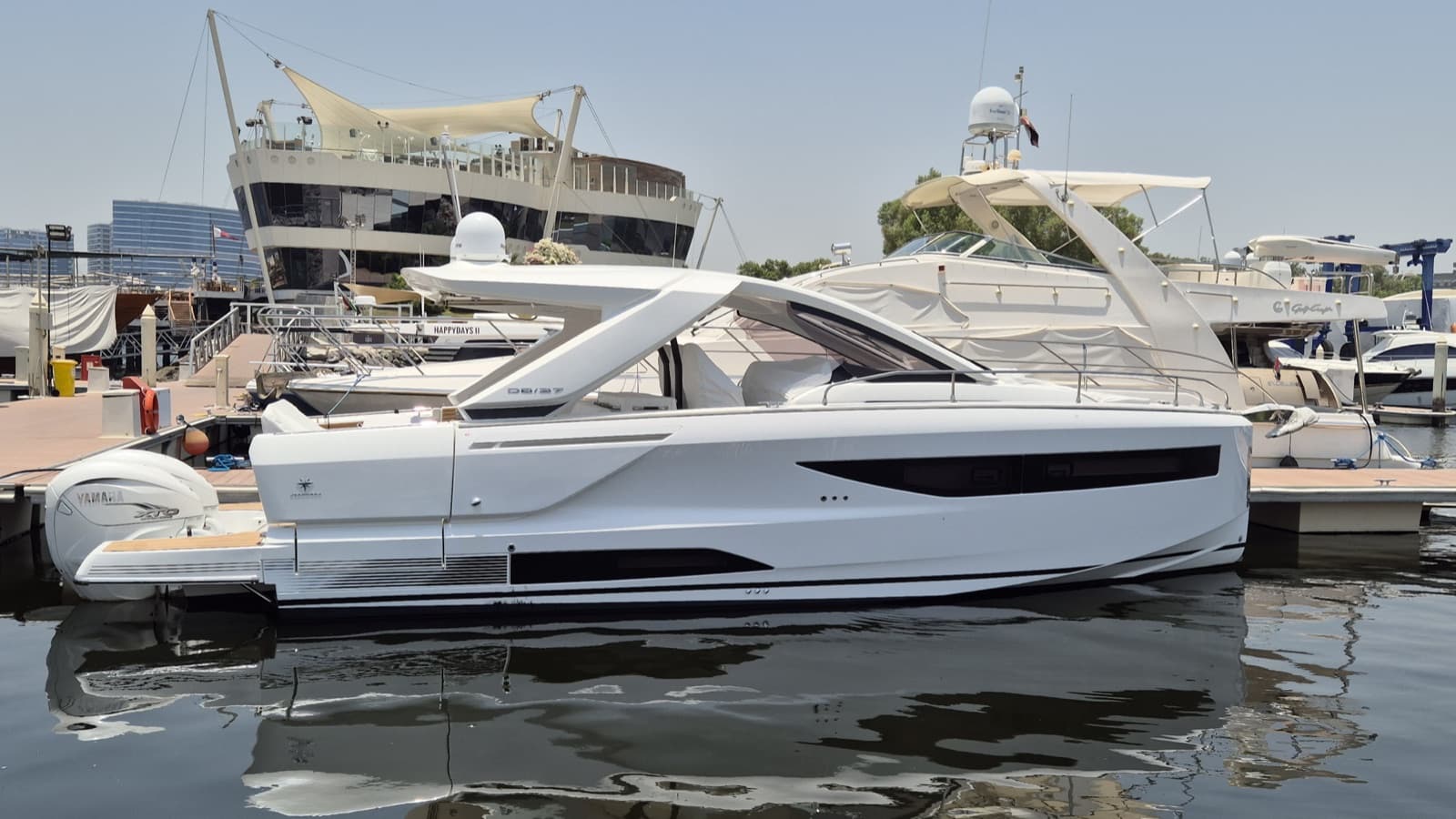
The Jeanneau DB/37 OB is a good example of a premium hardtop day boat for Gulf use. At 12.30 m (40 ft), it combines an open hardtop lounge with dual fold-out terraces that create a beach-club feel at anchor. With twin outboards up to 900 hp and typical cruise around 25-30 knots, it is well suited to fast runs between Dubai hotspots.
A flybridge can still work perfectly for day use. The upper deck becomes the preferred spot at anchor in cooler months. You just need to accept more vertical movement on board and ensure the flybridge has substantial shade for guests.
Is a flybridge better for family cruising and overnights?
For longer weekends, family trips to Abu Dhabi, or overnighting on anchor, a flybridge layout often adds meaningful comfort. The upper helm frees up the main deck for dining and relaxation, while cabins benefit from quieter, more private spaces below.
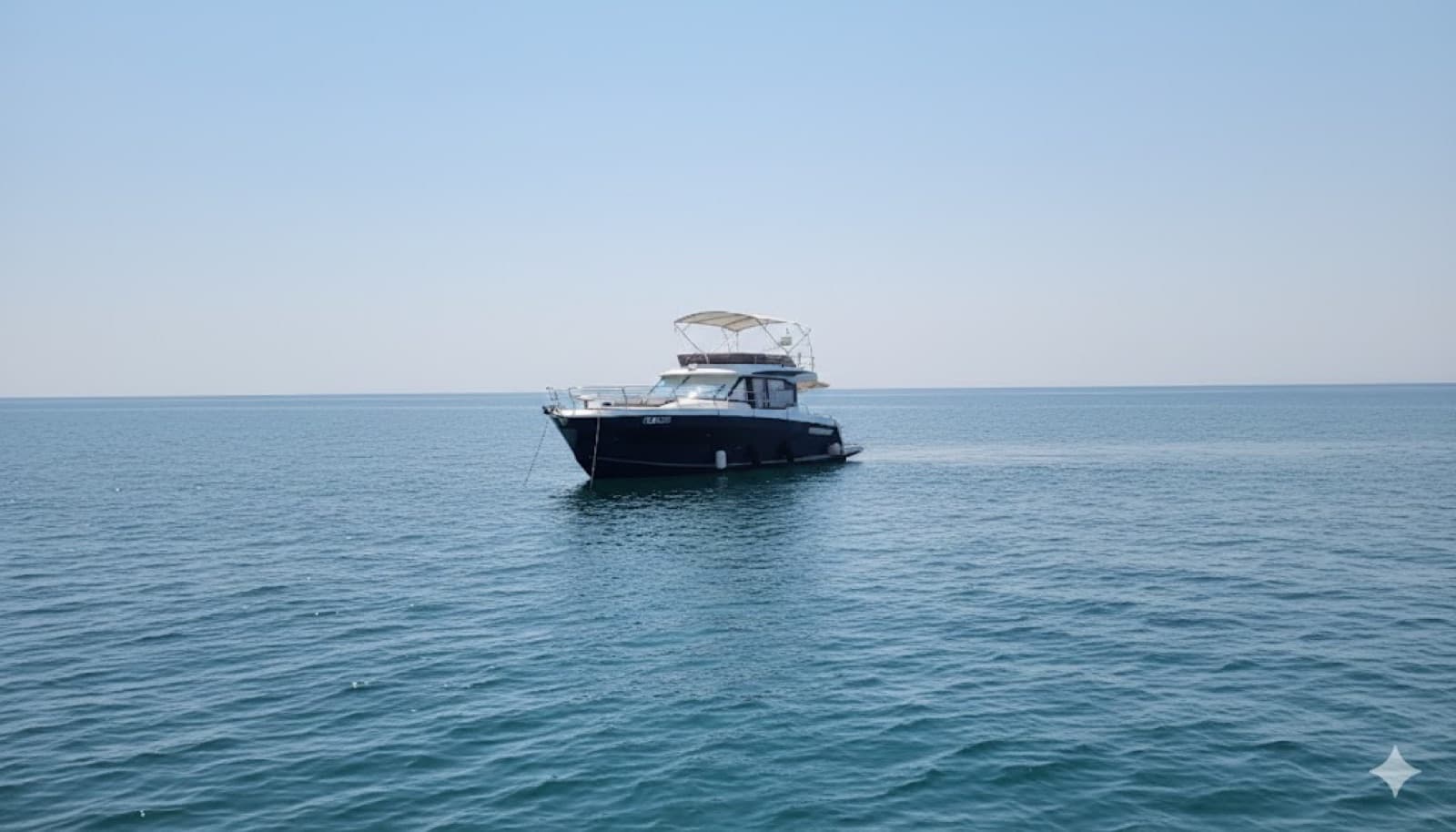
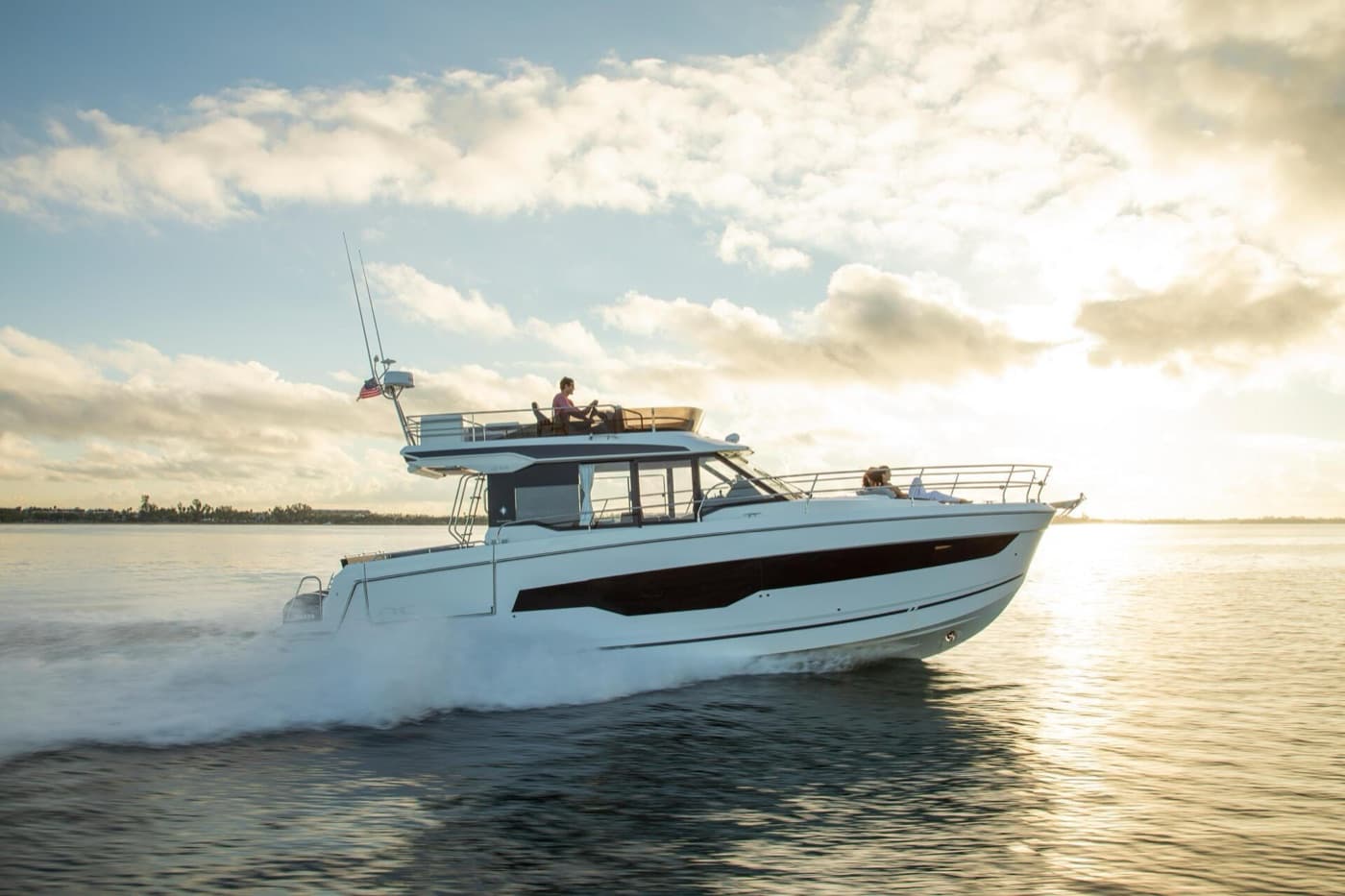
The Jeanneau Merry Fisher 1295 Fly illustrates this approach in a 12.56 m (41 ft) footprint. Three cabins with up to eight berths, two heads and a flybridge lounge create multiple zones: children can rest below while adults enjoy the views at the upper helm, or dine on the aft deck.
In the Gulf, being able to shift between shaded interior, covered cockpit and breezy flybridge makes longer days at sea more pleasant. If staying aboard is part of your plan, a flybridge design is often easier to live with over a long weekend than a pure day-boat hardtop.
How do handling, performance and fuel use compare?
All else equal, a hardtop will usually be marginally lighter and lower than a comparable flybridge model. Less weight high up and reduced windage tend to help with acceleration, fuel efficiency and stability at speed.
This becomes noticeable on windy Gulf days or when running at 25-30 knots for longer distances between Dubai and Abu Dhabi. A lower profile hardtop boat can feel slightly more settled, and can be a touch more economical at a given cruising speed.
A flybridge introduces extra weight higher in the structure and more surface area to the wind. Modern designs account for this with hull form and power, but you may feel slightly more motion up top, especially when seated at the upper helm. Many owners enjoy the elevated view and accept this trade-off.
What about maintenance and ownership practicalities in the Gulf?
Heat, UV and salt will influence how much care each layout needs. More exterior upholstery and exposed equipment on a flybridge means more covers, more cleaning and more regular replacement over the years.
With a hardtop, a higher proportion of your soft furnishings and electronics are shaded or indoors. This can reduce wear and tear, especially during the peak summer months when the boat sits in its berth under intense sun.
From an ownership perspective, a hardtop can be simpler if you do not have crew. Fewer exterior spaces to manage keeps weekly care realistic for a hands-on owner. A flybridge is entirely manageable too, but budgeting time or crew support for washing, canvas and detailing becomes more relevant.
For a sense of overall running commitments in Dubai, it is worth reading JJ Marine’s guides on the cost of owning a yacht in Dubai and how much a yacht costs in Dubai.
How does guest comfort differ for family, friends and charter?
Guest profiles should heavily influence your choice. For mixed-age families, extra seating and a separate zone on the flybridge can be valuable. Teenagers may gravitate to the upper deck, leaving the main deck calmer for adults and younger children.
For older guests or anyone less steady on their feet, stairs to a flybridge can be a concern in a seaway. In that case, a hardtop with all primary spaces on one level keeps movement simpler and safer.
If you are considering occasional charter, a flybridge often photographs better and feels larger at first impression. However, a stylish hardtop with clever terraces, such as the Jeanneau DB/37 OB, can offer a very strong day-charter platform, especially for corporate or social groups who favour one cohesive party space.
For more on how layout affects charter experience, see JJ Marine’s Dubai yacht charter guide and yacht rental in Dubai overview.
Flybridge or hardtop: which suits you in Dubai?
You can use this as a simple decision filter:
| Priority | Flybridge tends to suit you if | Hardtop tends to suit you if | | --- | --- | --- | | Typical use | You plan weekends aboard and coastal trips | You mostly do day boating and short hops | | Climate tolerance | You enjoy open-air breeze even in shoulder seasons | You prefer shade, AC and controlled environments | | Guests | You want multiple distinct social zones | You want everyone together on one easy level | | Handling focus | You prioritise the view and experience over small efficiency gains | You like slightly lower windage and simpler running | | Maintenance | You are comfortable with more exterior fabric and fittings | You prefer fewer exposed surfaces in Gulf sun |
Neither choice is inherently right or wrong. In practice, Gulf owners who cruise often with family and stay aboard gravitate to flybridge models like the Merry Fisher 1295 Fly. Those who prefer fast, stylish day use around Dubai increasingly choose hardtop designs such as the DB/37 OB.
If you are weighing up layouts for your first purchase, it can help to revisit basics on size and usage in JJ Marine’s guides to buying your first yacht in Dubai and what size yacht you need, as well as new vs pre-owned yachts in Dubai.
JJ Marine, based at Vida Dubai Marina & Yacht Club, can walk you through both flybridge and hardtop options in person, including the Jeanneau models mentioned above and other new or pre-owned listings. Our team brings four decades on the water to advising Gulf owners, and you can reach us directly on WhatsApp or phone at +971 50 454 8415, by email at jaamaa@jjmarine.ae, or via the contact page.